
Quick Answer
A Dane Doodle, also known as a Great Dane Goldendoodle mix, is a large designer dog breed created by crossing a Great Dane with a Goldendoodle. Adult Dane Doodles can typically reach around 25–32 inches in height and 70–120 pounds in weight, although their final size depends on genetics, the size of their Goldendoodle parent, and other inherited traits.
Dane Doodles do not have one fixed size because they are a mixed breed. Some puppies may grow closer to their Great Dane parent’s size, while others may inherit more of the Goldendoodle’s build. Understanding their growth stages, expected weight, and physical development can help owners prepare for life with these large dogs.
What Is a Dane Doodle?
A Dane Doodle is a cross between a Great Dane and a Goldendoodle. A Goldendoodle is itself a mix of a Golden Retriever and a Poodle. This means a Dane Doodle can inherit physical and personality traits from three different dog breeds.
These dogs are often known for their large bodies, friendly nature, and potentially wavy or curly coats. However, their appearance, temperament, coat type, and adult size can vary from one puppy to another.
Some common characteristics include:
- Large body: They may inherit the tall and muscular build of a Great Dane.
- Coat variations: Their coats can be wavy, curly, or relatively straight.
- Friendly personality: They may inherit the social nature of Golden Retrievers and Poodles.
- Different growth patterns: Puppies from the same litter may develop at different rates.
How Big Do Dane Doodles Get When Fully Grown?
Dane Doodles generally grow into large or extra-large dogs. Their adult height and weight depend mainly on the size and genetics of both parent dogs.
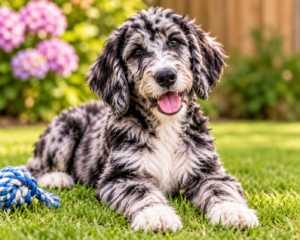
A typical adult Dane Doodle may measure around 25–32 inches at the shoulder and weigh approximately 70–120 pounds. However, these are general estimates rather than guaranteed breed standards.
Dane Doodle Adult Size Chart
The following chart provides a general reference for adult Dane Doodle size. Individual dogs may fall outside these ranges depending on their parentage.
| Measurement | General adult estimate |
|---|---|
| Height at shoulder | 25–32 inches |
| Weight | 70–120 pounds |
| Size category | Large to extra-large |
| Growth period | Around 18–24 months |
Important: These figures are practical estimates, not an officially established Dane Doodle breed standard. The size of the parents is a better starting point when estimating a puppy’s adult measurements.
Dane Doodle Growth Chart: Puppy to Adult
Dane Doodles go through several stages of physical development. Their bodies grow quickly during puppyhood, while muscle development and overall body maturity continue as they get older.
Here is a general overview of what owners can expect at different ages.
| Age | Growth and development |
|---|---|
| 0–3 months | Rapid early growth, developing coordination and basic movement |
| 3–6 months | Noticeable increase in height, leg length, and body size |
| 6–12 months | Continued growth, with changes in weight and muscle development |
| 12–18 months | Many dogs approach their adult height, while their bodies continue filling out |
| 18–24 months | Continued physical maturity, muscle development, and changes in body condition |
Not every Dane Doodle follows the same timeline. Puppies with stronger Great Dane characteristics may take longer to reach full physical maturity than smaller dogs.
When Do Dane Doodles Stop Growing?
Most Dane Doodles reach much of their adult height during their first year, but they may continue gaining muscle and developing their adult body shape for several more months.
Larger dogs can take around 18–24 months to reach physical maturity. Their growth rate depends on genetics, nutrition, overall health, and individual development.
It is important to remember that a dog reaching its adult height does not mean its body has finished developing.
What Factors Affect a Dane Doodle’s Adult Size?
Several factors influence how big a Dane Doodle becomes. Even puppies from the same litter can have different adult heights and weights.
1. Parent Size and Genetics
Genetics is one of the biggest factors affecting adult size. A puppy with a larger Great Dane parent and a Standard Goldendoodle parent may grow considerably larger than one with smaller parents.
Before choosing a puppy, ask the breeder about the adult height and weight of both parents. This information can help provide a more realistic size estimate.
2. Goldendoodle Generation and Size
Goldendoodles come in different sizes depending on the Poodle parent used in breeding. Standard Goldendoodles are generally larger than Miniature and Medium Goldendoodles.
The Goldendoodle Association of North America categorizes Goldendoodles by size, including Petite, Miniature, Medium, and Standard. These differences can influence the size of a Dane Doodle puppy.
Generation also matters, so it helps to understand F1 vs F1B vs F2B Goldendoodles when comparing litters.
3. Nutrition and Diet
Proper nutrition supports healthy bone, muscle, and body development. Dane Doodle puppies need a balanced diet appropriate for their expected adult size and growth stage.
Consider these feeding tips:
- Choose a complete and balanced large-breed puppy food when recommended for your puppy.
- Follow feeding guidance based on age, weight, and activity level.
- Avoid excessive treats and unnecessary calorie intake.
- Keep fresh drinking water available throughout the day.
- Ask your veterinarian when to transition from puppy food to adult food.
Overfeeding will not help a puppy reach a healthier adult size. It can contribute to excessive weight gain and place additional stress on developing joints.
4. Exercise and Physical Activity
Dane Doodles need regular physical activity to maintain healthy muscles and body condition. However, puppies should not be pushed into strenuous exercise while their bones and joints are developing.
Suitable activities include:
- Short, age-appropriate walks.
- Gentle play sessions.
- Basic obedience training.
- Supervised play in a safe outdoor area.
- Mental stimulation through interactive toys.
Avoid excessive jumping, forced running, and repetitive high-impact activities during puppyhood.
How to Measure Your Dane Doodle’s Height and Weight
Tracking your dog’s measurements can help you understand its development and notice unusual changes.
Measuring Height
Follow these simple steps:
- Ask your dog to stand naturally on a flat surface.
- Keep all four paws comfortably positioned.
- Locate the highest point of the shoulder blades, known as the withers.
- Measure vertically from the floor to this point.
- Record the measurement and repeat it periodically.
Remember to measure height at the shoulder rather than at the top of the head.
Measuring Weight
You can monitor your Dane Doodle’s weight using a suitable pet or veterinary scale.
- Weigh your puppy regularly.
- Record the date and weight.
- Compare measurements over time rather than focusing on one reading.
- Consult your veterinarian if growth slows unexpectedly or weight increases too quickly.
A healthy body condition matters more than reaching a particular number on a size chart.
Dane Doodle vs. Great Dane vs. Goldendoodle: Size Comparison
Understanding the parent breeds can help explain why Dane Doodle puppies vary in size.
| Dog type | Approximate adult height | Approximate adult weight |
|---|---|---|
| Great Dane | 28–32 inches | 110–175 pounds |
| Standard Goldendoodle | 20–24 inches | 50–90 pounds |
| Dane Doodle | 25–32 inches (estimated) | 70–120 pounds (estimated) |
These are broad comparison ranges, not predictions for individual puppies. Great Dane measurements are based on veterinary breed information, while Standard Goldendoodle estimates vary by source and parent size.
A Dane Doodle may inherit the Great Dane’s long legs and tall frame, along with the Goldendoodle’s coat texture and body characteristics. However, there is no guarantee that every puppy will have the same combination of traits.
What Does a Full-Grown Dane Doodle Look Like?
[Insert image here. Alt text: “Full-grown Dane Doodle showing tall frame and wavy coat”]
A fully grown Dane Doodle may have a tall, athletic body with long legs and a broad chest. Its appearance depends on which physical traits it inherits from its Great Dane and Goldendoodle parents.
Common appearance characteristics include:
- Body structure: Tall, strong, and athletic.
- Head shape: May resemble either parent breed.
- Coat texture: Straight, wavy, or curly.
- Legs: Often long, especially when Great Dane characteristics are prominent.
- Overall appearance: A combination of the Great Dane’s size and the Goldendoodle’s coat characteristics.
Not all Dane Doodles look alike, even when they come from the same parents.
Tips for Supporting Healthy Dane Doodle Growth
Raising a large dog requires attention to nutrition, exercise, grooming, and regular health checks.
Here are some useful tips for owners:
- Schedule regular : Monitor weight, joint development, and overall health as your puppy grows.
- Provide balanced nutrition: Choose food suitable for large-breed puppies and follow veterinary feeding recommendations.
- Maintain a healthy weight: Avoid overfeeding and monitor your dog’s body condition.
- Introduce gentle exercise: Use controlled walks and age-appropriate play rather than strenuous activities.
- Start training early: Teach basic commands, leash manners, and social skills while your dog is young.
- Maintain regular grooming: Brush the coat regularly, particularly if your Dane Doodle inherits a wavy or curly Goldendoodle coat.
These habits can help support your dog’s overall well-being throughout its development.
Frequently Asked Questions About Dane Doodle Size
1. Are Dane Doodles considered large dogs?
Yes. Dane Doodles are generally considered large or extra-large dogs because they inherit size characteristics from the Great Dane. Their final size depends on the genetics and size of both parents.
2. How much does a full-grown Dane Doodle weigh?
A full-grown Dane Doodle may weigh approximately 70–120 pounds. However, some dogs may weigh less or more depending on their parent breeds and individual genetics.
3. At what age is a Dane Doodle fully grown?
Many Dane Doodles approach their adult height between 12 and 18 months. However, their muscles and overall body structure may continue developing until approximately 18–24 months.
4. Are male Dane Doodles bigger than females?
Male Dane Doodles may be taller and heavier than females, but this is not guaranteed. Their adult size depends on inherited genetics, parent size, and individual development.
5. Can you predict a Dane Doodle puppy’s adult size?
You can estimate a puppy’s adult size by considering the height and weight of both parents, its growth history, and its genetic background. However, no calculation can guarantee its final measurements.
6. Does a Dane Doodle need a lot of space?
Dane Doodles generally benefit from enough indoor and outdoor space to move comfortably. They need daily exercise, a comfortable resting area, and opportunities for play and mental stimulation.
Conclusion
Dane Doodles can grow into impressive large dogs, combining the height and strength of a Great Dane with characteristics inherited from a Goldendoodle. Their adult height, weight, and development depend on parent genetics, nutrition, exercise, and overall health.
If you are considering bringing a puppy home, understanding its expected adult size can help you prepare for its food requirements, living space, exercise, and long-term care. Always ask the breeder about the parents’ measurements and consult a veterinarian to monitor your puppy’s growth.
A little preparation during puppyhood can make a big difference in supporting a healthy, happy adult dog.