
Quick Answer:
Mats are best prevented with regular brushing, regular checks of the spots where hair rubs together, and careful drying after baths. A slicker brush and a metal comb help you find and work out small tangles. Tight mats close to the skin are a job for a professional groomer, because they can hurt your dog and cause accidental injuries.
Goldendoodles are loved for their soft, wavy, or curly coats, but those coats need regular care. Loose hair, moisture, and friction can all lead to knots, especially behind the ears, under the legs, and around the collar. A consistent routine keeps your dog comfortable, clean, and easy to manage.
Why Goldendoodles Get Mats
Goldendoodle coats can be curly, wavy or fairly straight, and the texture and length of the hair affect how easily it tangles. Curly coats can trap loose hair, while longer coats can knot as your dog runs, plays, or rests. The main causes are:
- Infrequent brushing: Loose hair and small tangles pile up when the coat is not brushed often enough.
- Friction: Hair behind the ears, under the front legs, around the collar, and between the legs rubs together during everyday activity.
- Moisture: Baths, swimming, and wet grass can make an already tangled coat harder to manage.
- Long hair: Longer coats need more upkeep because they knot more easily.
Checking the coat often lets you catch small tangles before they become tight mats that pull on the skin.
How to Prevent Mats
1. Brush regularly
Many Goldendoodles benefit from daily brushing, especially those with curly, long or easily tangled coats. Use a suitable slicker brush and work in small sections, brushing gently from near the skin outward. Brushing only the top layer can leave hidden tangles underneath.
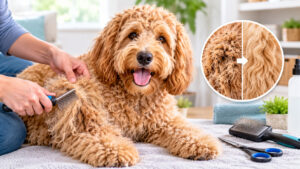
Afterward, run a metal comb through to confirm the hair is knot-free. If the comb catches, don’t force it. Work on the tangle gently, or get professional help if it is too tight.
2. Check the trouble spots
Friction and movement make some areas more likely to mat. Look at these during every grooming session:
- Behind and beneath the ears
- Under the front legs and around the armpits
- Around the neck and beneath the collar
- The belly and inner legs
- Around the tail and hindquarters
Finding knots early makes them far easier to deal with.
3. Dry the coat carefully after bathing
Check for knots and gently ease out minor tangles before the bath, since water and washing can tighten existing mats. Afterward, blot the coat with a towel rather than rubbing it vigorously.
A pet-safe dryer on a low setting can help. Keep it at a safe distance, watch the temperature, and brush and comb small sections as the coat dries, as long as your dog is comfortable.
4. Keep the coat at a manageable length
A shorter cut can make grooming easier for dogs that mat often. A professional groomer can recommend a practical length based on your dog’s coat texture, activity level and your home routine. Shorter hair still needs regular brushing, because tangles can form wherever friction occurs.
Removing Mats Safely at Home
Small, loose tangles can often be dealt with at home. Work gently and stop if your dog seems uncomfortable.
- Inspect the mat. Note its size, location and how close it is to the skin. Don’t try to force apart tight or widespread mats.
- Use a dog-safe detangling spray, following the label instructions.
- Loosen gently. Use your fingers to separate the outer edges of the tangle without pulling on the skin.
- Work in small sections. With a suitable brush or metal comb, start at the ends of the loose hair and move gradually toward the roots.
- Watch for warning signs. Stop if the comb catches, the skin moves with the mat, or your dog shows pain or distress.
Keep sessions short and reward your dog with praise and treats.
Safety warning: Never cut a mat out close to the skin with scissors. The skin can get caught up in the tangled hair, making accidental cuts more likely. Tight mats, mats covering large areas and tangles that cause pain should be handled by an experienced groomer. If the skin looks red, swollen, wounded or painful, see a veterinarian.
Common Grooming Mistakes
- Brushing only the surface, which leaves hidden knots near the skin.
- Pulling too hard, which can hurt your dog and make them fear future grooming.
- Bathing a heavily matted coat, because washing may tighten the tangles.
- Using human hair products, which may not suit dogs and could irritate their skin.
- Ignoring small knots, which get harder to remove the longer they are left.
Gentle, consistent grooming is usually easier on your dog than tackling many mats in one long session.
How Often Should You Brush?
The right schedule depends on coat texture, hair length and how quickly tangles form.
|
Coat type |
Suggested Brushing Routine |
|---|---|
| Curly coat | Daily, with careful checks for hidden mats |
| Wavy coat | Several times a week, or daily if tangles develop quickly |
| Shorter coat | Several times a week, with extra attention to friction-prone areas |
These are general guidelines, not fixed rules. If knots appear between sessions, brush more often. If mats keep forming despite regular brushing, reconsider your coat length, technique, or frequency, and ask a professional groomer to help set up a maintenance routine.
Frequently Asked Questions
What is the best brush for a Goldendoodle?
A suitable slicker brush works through tangles, and a metal comb finds knots hidden under the outer coat. Choose tools that suit your dog’s coat length and use gentle pressure to avoid irritating the skin.
Can I remove mats at home?
Small, loose tangles often can be loosened with your fingers, a dog-safe detangling spray, and gentle brushing. Tight, close-to-the-skin or widespread mats should go to a professional groomer.
Does bathing make mats worse?
It can, especially if the coat is already tangled or is rubbed vigorously during washing. Check the coat first and dry it carefully afterward.
How do I stop mats from coming back?
Brush regularly, check friction-prone areas, dry the coat properly after baths and keep the coat at a manageable length.
When should I see a professional groomer?
When mats are tight, widespread, close to the skin or hard to loosen without pulling. If the skin is irritated, wounded, swollen, or painful, contact a veterinarian.
Conclusion
Healthy Goldendoodle coat care comes down to regular brushing, attention to hidden tangles, and proper drying after baths. The right tools and a manageable coat length make daily care easier. Above all, put your dog’s comfort first: if a mat can’t be removed gently, stop and seek professional help rather than risk an injury.
At Glamour Doodles, we encourage responsible coat care to help Goldendoodles stay comfortable and well-groomed. Explore our available Goldendoodle puppies and learn more about welcoming a new companion into your family.